Family law has changed dramatically over the last several decades, especially when it comes to women’s rights during divorce and custody proceedings. While Illinois law has evolved to provide greater legal equality between spouses, many women still face financial and caregiving challenges that can significantly affect divorce outcomes.
At The Law Office of Tania K. Harvey, our collaborative divorce lawyer Bloomingdale understands that divorce is not only a legal process but also a deeply personal and financial transition. Understanding the historical context of women’s rights in family law helps explain why issues like financial fairness, caregiving responsibilities, and economic stability remain important today. Request a free consultation by calling 312-803-5845 today.
Historical Disadvantages Women Faced in Divorce
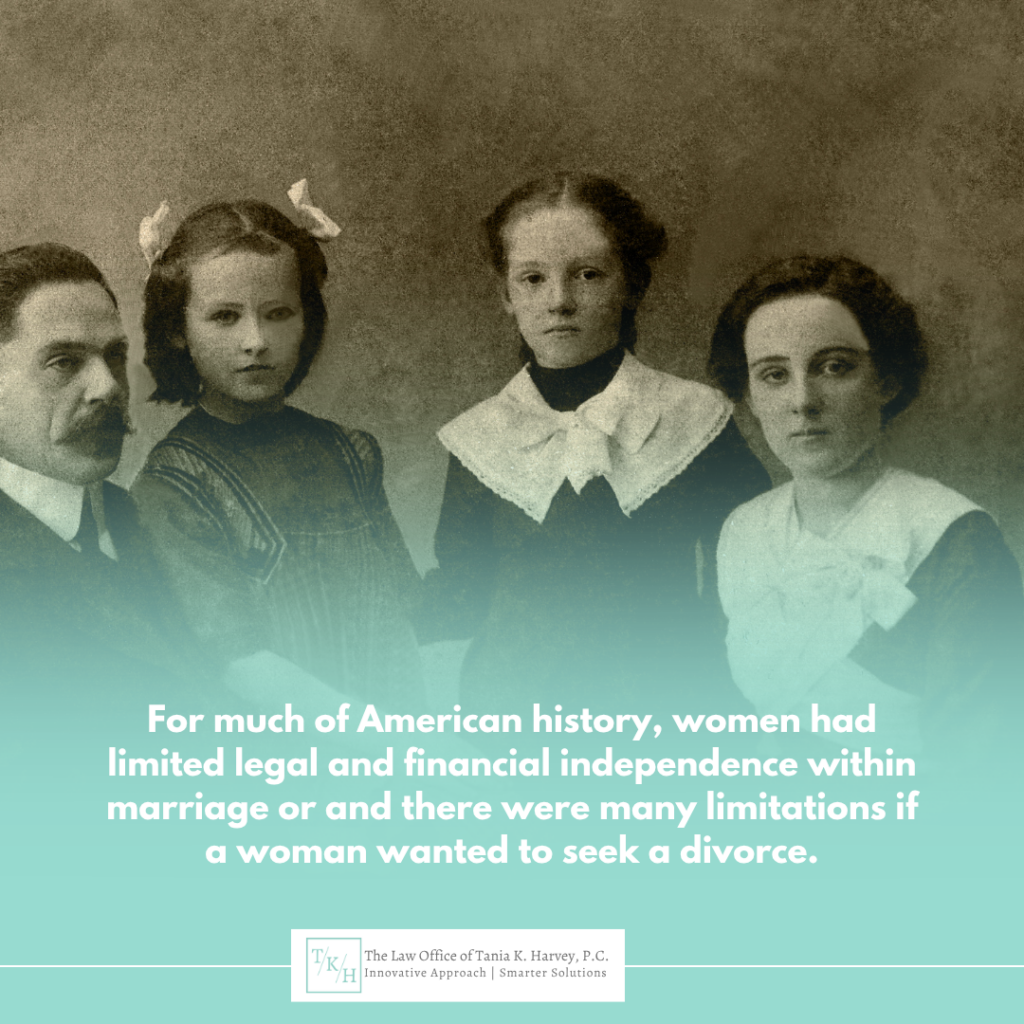
For much of American history, women had limited legal and financial independence within marriage. In the 19th and early 20th centuries, many married women could not independently own property, open bank accounts, sign contracts, or access credit without their husband’s involvement. This means most women would have been financially unable to seek a divorce or at a disadvantage if they did.
Divorce laws also historically favored men in many ways. Women who left marriages often faced severe economic hardship because they had fewer employment opportunities and limited access to education or financial resources.
Even when courts awarded custody to mothers, women were still frequently left financially vulnerable. Many women had spent years out of the workforce raising children or supporting a spouse’s career, making it difficult to rebuild financial independence after divorce.
Over time, legal reforms and women’s rights movements helped reshape family law by recognizing marriage as an economic partnership rather than a system where one spouse controlled finances and decision-making.
How Illinois Family Law Has Evolved
Illinois family law has changed significantly in ways designed to create more equitable outcomes for both spouses.
Today, Illinois courts apply gender-neutral standards in matters involving:
- Property division
- Parenting time
- Allocation of parental responsibilities
- Spousal maintenance
- Child support
Illinois is an “equitable distribution” state, meaning marital property is divided fairly rather than automatically split equally. Courts evaluate many factors, including each spouse’s financial contributions and non-financial contributions to the marriage, such as caregiving and homemaking.
Illinois law also recognizes that unpaid labor inside the home has real economic value. A spouse who paused a career to raise children or support the household may still have strong claims involving property division or maintenance. Our collaborative divorce lawyer Bloomingdale will make sure your contributions are factored into the divorce.
In parenting cases, Illinois courts no longer automatically favor mothers or fathers. Instead, judges focus on the “best interests of the child” standard when determining parenting time and decision-making responsibilities. These legal changes represent major progress toward equality, but challenges still remain.
The Ongoing Impact of the Gender Pay Gap
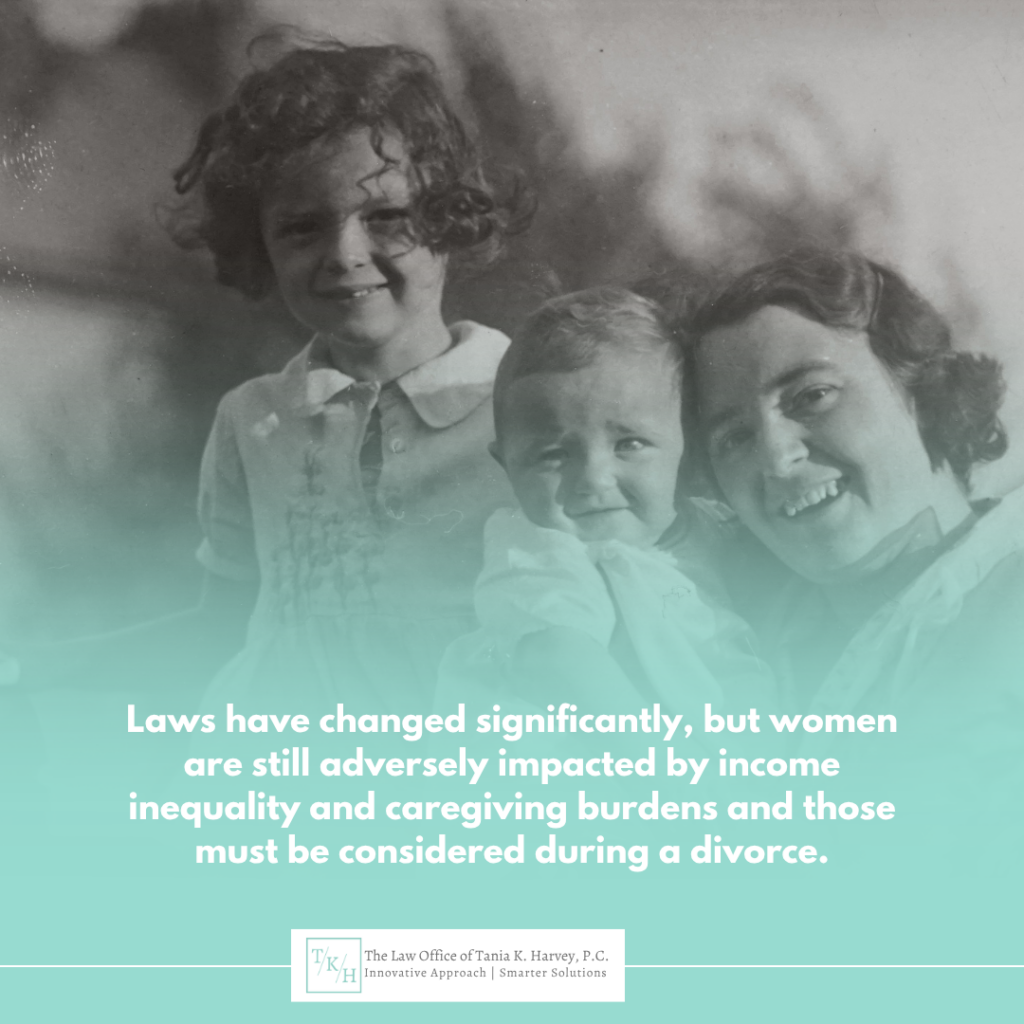
One continuing issue affecting many divorcing women is income inequality. Although women participate in the workforce at historically high levels, women on average still earn less than men for comparable work in many industries.
The gender pay gap can have serious effects during divorce proceedings because lower lifetime earnings often translate into: smaller retirement savings, reduced Social Security benefits, less access to financial resources, and greater economic instability after divorce.
Women who earn less than their spouses may be more financially dependent during marriage, which can make divorce feel especially overwhelming. In some cases, our Collaborative Divorce Lawyer Bloomingdale will make sure you receive spousal maintenance, as it can be essential to help a lower-earning spouse transition toward financial independence.
Caregiving Responsibilities Often Fall Unevenly
Caregiving responsibilities also continue to disproportionately affect women. Even in households where both spouses work full-time, women frequently perform larger shares of childcare, scheduling, emotional labor, and household management.
These caregiving burdens can affect career advancement, earning potential, and long-term financial security. A parent who temporarily leaves the workforce or reduces hours to care for children may face significant challenges reentering the job market after divorce.
Our attorneys and the courts may consider these realities when evaluating spousal maintenance, parenting schedules, educational expenses, and future earning capacity. Illinois law attempts to account for these sacrifices, but the economic effects of caregiving can still last for years after a marriage ends.
Collaborative Divorce Lawyer Bloomingdale | Why Equality Still Matters Today
Although family law has become more balanced and gender-neutral over time, true equality requires courts and families to recognize the real-world economic and caregiving dynamics that still affect many women.
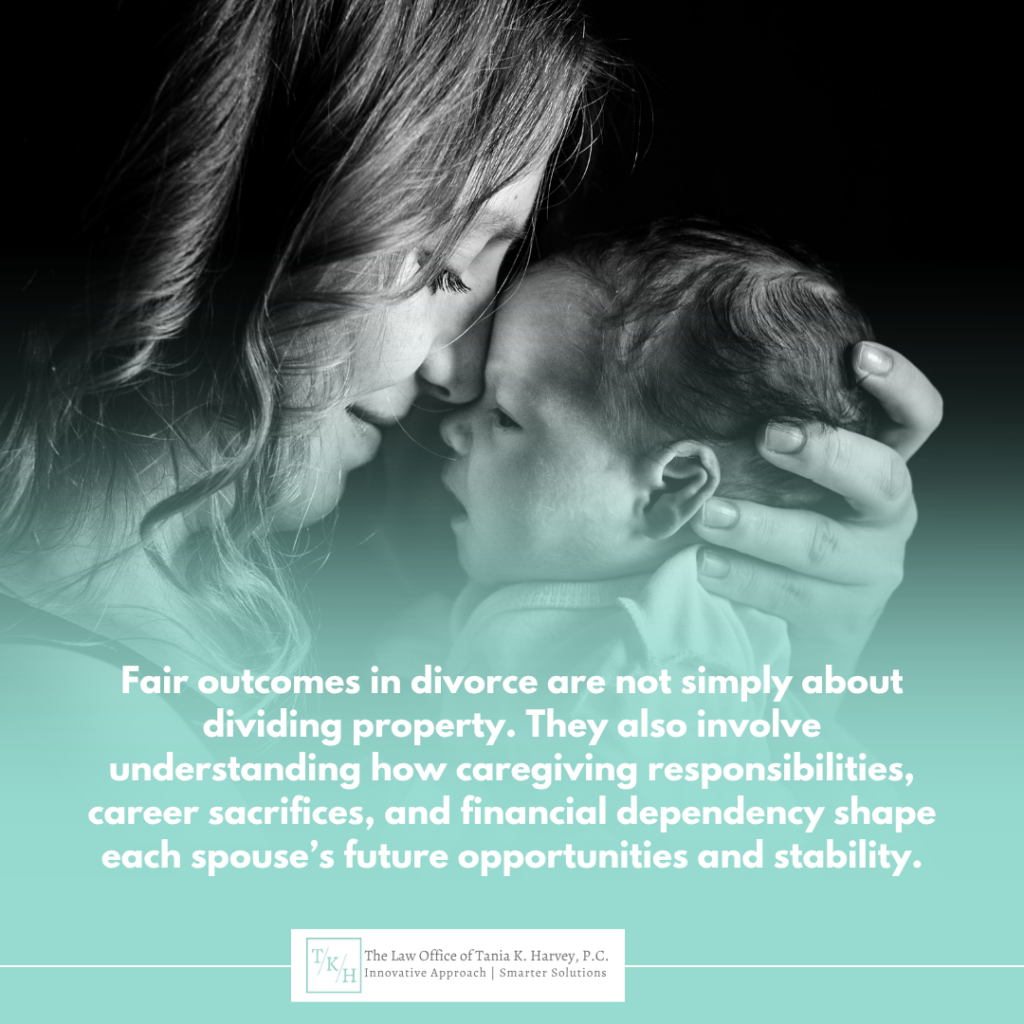
Fair outcomes in divorce are not simply about dividing property. They also involve understanding how caregiving responsibilities, career sacrifices, and financial dependency shape each spouse’s future opportunities and stability. Our collaborative divorce lawyer Bloomingdale will make sure we are basing any agreements on the complete picture of the parents’ roles and responsibilities throughout the marriage.
At The Law Office of Tania K. Harvey, we believe compassionate and informed legal representation matters. Whether you are facing divorce, parenting disputes, or financial uncertainty, understanding your rights and long-term options can help you move forward with greater confidence and security.